Take to the streets

Last week, on the streets of Joburg, I approached three young women and asked if I could read them a chapter of my book, Lost Where We Belong.

Lehlogonolo, Mpho and Gracious are all students at a business school in Braamfontein. We had never met before.

I explained that I had written a book in which I confront the legacy of our racist history, and the difficulty of transformation of the human soul. I told them that the book was struggling to find a publisher because the publishing industry – both in South Africa, and internationally – doesn’t believe there is a big enough market for a book that confronts issues of racism, prejudice, fear and ignorance from a white point of view because the topic is “too upsetting”. I told them I was done with being silenced and had decided to read the book out loud on the streets.

I read them Chapter 1, Another White Girl in Africa. See the video above.

When I had finished I asked Lehlogonolo what she thought.

“It’s good to listen to this. I was born in 1995. I don’t really know what happened because no one will talk to me about the past. What I do know is that it is still on everyone’s mind, they are still stuck on it.  We need to hear this so they can finally let go and we can all be free.”

Follow me on Twitter @writerclb

Shame man

IMG_6303

Thanks to Consciousness Café I have developed a close relationship with a black woman in her 50s.

One evening, over a glass of wine she told me: “Every time a white person apologies to me for apartheid, I feel like I heal a little bit more. It’s like a balm being rubbed into my soul.”

I nearly dropped my wine glass. At first I didn’t say anything. I mulled it over.

Later in the conversation I asked: “Say if that apology comes from someone like me, someone younger than you who was a child during apartheid, who didn’t really do anything to create that system, does it still make you feel better?”

“Absolutely,” she said. “It doesn’t matter who it comes from. When someone says sorry, the way it lands in my heart, is that they actually get it. They get how hard it was for me, how I had to virtually crawl on my hands and knees through a system that told me I didn’t belong. It makes me feel like my struggle as a black woman has been seen and acknowledged.”

I was stunned. Over the next few weeks I ran the story past my close white friends.

“How do you think older black people would feel if you apologised to them for apartheid?” I asked.

“I think they would think it was a bit of a cheek,” said one friend.

“I think they would think: ‘I don’t need your apology white girl. Get over yourself’,” said another.

I nodded. That’s exactly what I had thought. I thought an apology would be seen as a kind of arrogance. We have a black majority government, be quiet. Your apology is as irrelevant as a leaf in the wind.

How is it that we’ve got it so, so wrong?

Not long after, I tripped in the car park at the Spar.

“Sorry,” said the car guard.

“Why are you saying sorry? It’s not your fault. You didn’t do anything,” I said, in a mixture of embarrassment and irritation.

He looked at my silently, and in that moment, something shifted in my head. Of course.

Every time you trip over, or drop something, or admit you are stressed, the typical response from a black South African to these small misfortunes is to say “Sorry”.

They will personally have had nothing to do with your misfortune – they will merely be bystanders and observers – but the immediate response is “Sorry”.

For too long, I had mistakenly though that black people said sorry because they were acting out an old role of being subservient to the white madam’s pain. But that is not it, is it?

Rather it is a sorry that translates as “I have noticed you and your misfortune, I empathise with you because I see it caused you a little bit of pain, distress, annoyance, embarrassment, and I know what that feels like. I am sorry that happened to you.”

And it’s funny, because white South Africans empathise in a similar way, but we use a different expression – we say: “Ag Shame” or “Shame man”.

I’m cold. Ag shame.

I tripped. Ag shame.

I’m so stressed. Shame man.

Shame is such a uniquely white South African expression which is used to show compassion, though by its dictionary definition, shame is something else. The real meaning of shame is a feeling of guilt, regret, or sadness that you have because you know you have done something wrong.

Sorry and shame. We have got them confused. Perhaps not surprising given our history.

At a recent Consciousness Café I publicly said sorry to Keke and Anisha for the pain and struggles that they continue to experience – especially Keke – because of the colour of her skin in our society.

As I said those words out loud in a room of people, I didn’t feel contrition, or shame, or guilt, rather I just felt a deep channel open between us, and a sense that our ability to stand side by side against the injust system which continues to divide us, grew stronger and more resilient.

Follow me on Twitter @writerclb

The Good White Myth

IMG_5737

I started writing about race relations in 2010, long before people – and by that I mostly mean black people – started insisting that I confront my privilege and my white centrist view of the world. These were the carefree days before anyone had shouted at me in anger and frustration, before anyone openly showed their contempt for me because of what my skin represents to them. These things have since happened.

When I first started writing I felt isolated and alone. At the time my fellow white skins were still living under the illusion of the rainbow nation, the belief that if we all just kept smiling and shaking hands, the past would eventually vanish, that Mandela had done the hard work, and we didn’t have to. No one I spoke to wanted to share this interrogation with me. Close friends rejected the project.

“I don’t need to go there.”

“Ag man, light the braai.”

Subject closed.

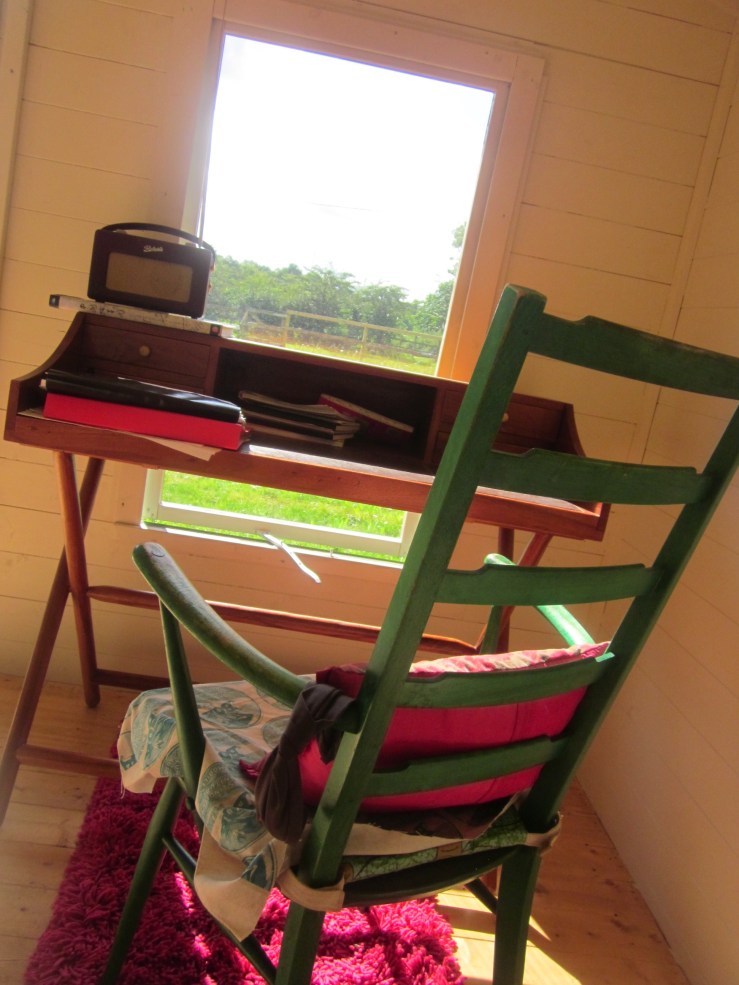
So I sat alone in a shed at the bottom of my garden tapping on my computer, trying to make sense of why I felt so lost and confused in the place where my green identity documents say I belong, and simultaneously trying to bat away the hissing, doubting, chastising voice in my head: “Who are you to write about this? You are nobody. You were not a struggle leader. You were not there. You will never understand.”

Silenced by the weight of history. Silenced by my tribe. But I did not stop tapping. I was trying to write myself back into South Africa’s story.

There was something else that was fuelling this quest. Something I only realized earlier this year. I was trying to become a Good White.

I thought that if I could make sense of everything around me, and fix something in me, then good whiteness would make its mark on me in such a way that it would be noticeable from the outside and I would be forever free of the racist stain of history. I was trying to write myself clean. I had no idea how fraught that idea was – and how it was a further barrier to the healing of this country.

Last year, I became part of Consciousness Café. We are three women – Keke Motseke, Anisha Panchia and myself – who create spaces for South Africans to come together to have deep, honest, transformative conversations about race, identity, injustice and all the other gnarly topics that affect our lives. A TRC for Everyman. Last November we were invited to host a café in Soweto. Because Keke is black, she was the host and Anisha and I were among the participants.

At every café the participants choose the topic, and on that day the topic that came up was: “Why is there no space for black anger?” Why is it that whenever black people try to express their hurt and fury with the past, and with how those injustices continue to bear down on the present, white people cannot listen. Instead, we always try and prove how we are different, that we are not racists, that we are the Good Whites. The story becomes about us, trying to show that we are better, different, purer that the other really awful whites.

That day, in that space, my “me too” dialogue was shot down and shut down. I was forced to listen, and to realize something that I could hardly bear to hear. That no matter how much I wrote, how many Consciousness Cafés I hosted, how many black friends I made, how good my Zulu gets, we are all threads of this age-old tale and the actions of one person – me – cannot free me from the collective burden of history.

To black people on the street, black people who have never met me, black people who meet for the first time, my white skin will always appear as an enviable safety net that greases my path through the world. I’ll always be guilty before proven innocent.

And what’s more, my desperate attempt to prove myself a Good White is a category error. Whiteness in this country is steeped in a long and sad history of power abuse. Whiteness in this country doesn’t automatically go with good.

Now that’s an awful thing to have to face up to. Everybody on earth wants to be seen as good. Even ISIS thinks they are the good guys. That’s how we work. So to contemplate that in South Africa, my skin colour precludes me from ever been the good guy at first glance, that’s a heavy truth to bear.

That day in Soweto, I realized that I had to grow very big shoulders. That to be whole in this country was not to seek the moral highground, it was to be brave enough to sit with the sadness, the anger, the complexity and the uncomfortable truths. I could never become a Good White, but by slowing down and listening, I had a chance of becoming a good person. Though nobody may notice.

Follow me on Twitter @writerclb

Meaning Fall

13391564_10157048942160422_3179583930018148195_o

Last week at Wits Art Museum (WAM) I met Anthony Nsofor, an artist from Nigeria who is in Joburg for a month to be inspired and make art. We were both there to see the Black Modernisms show. I filled him in on the tension that had brewed around the show.

The show had been curated from WAM’s archives by Wits Professor Emeritus Anitra Nettleton, a white art historian, and included pieces that had been created by black artists during the period 1940-80, a period that slots into that which European art historians define as Modernist.

A furious debate broke out on social media and in the press when black Wits research associates, Dr Same Mdluli and Bongani Mahlangu, who had been billed as co-curators of the exhibition, distanced themselves, saying that they had very little say its conception and curation, that they had been used as black tokens to give the exhibition validity, and that not only did the exhibition omit key black artists from that period, it made the mistake of continuing to use a European label in which to frame black expression.

“Modernism concerns the avant-garde and a period marked by departure in Europe from royalties to republics made possible by the cross-Atlantic slave trade. Advancement for Europe saw the oppression of blacks. We have to ask what makes art by black artists modern,” argued Khwezi Gule, chief curator of the Soweto museums.

“One would expect a university to be at the forefront of creating new knowledge in a post-colonial society,” says Nontobeko Ntombela, a member of Black Mark: Collective Critical Thought (BMCCT) which convened a public forum to discuss the matter. “Why would we want to continue to situate art as colonial, nativist tropes? By doing that the black body remains the problem.”

This failure to interrogate the dominant art paradigms was put at the white feet of Nettleton who was accused of presiding over a white women network which continues to wields institutional power through its social network, to have a paternalistic view towards black artists, thus “perpetuating the myth that white power brokers are still needed and relevant.”

The debate had deepened when Nettleton hit back by labelling the criticisms as a personal attack.

I explained this Tony over a coffee in the WAM café.

“We’re at a point when the narrative is shifting, new voices are emerging and strengthening, and as a white person, you are questioning your relevance. It’s fascinating and unnerving,” I admit.

We continued together out onto the streets of Braamfontein, stopping in at the Stevenson gallery, where there was a show made up mostly of neon colours and abstract shapes.

“What did you think? “ asked Tony as we left the gallery.

“I didn’t really get it, so I didn’t like it,” I replied.

“But why do you need to get something from it?” he asked.

I think for a moment.

“Aren’t we all trying to make sense of ourselves in this world? When you see art that seems to represent what you’ve been thinking about, it makes you feel less alone,” I say.

We walk round the corner. Tony spots a pink rose petal lying on the pavement. He picks it up.

“See this rose petal. When I see it, I do not ask why it’s there. I just pick it up and admire its delicate skin, its pale pink edges. I do not ask why. We permit nature to perform without asking why. We can love this petal when it falls on the floor without it having a reason for being there, so why can we not permit the same from human beings when they make art? Why must it always have meaning?”

I nod. “It’s a good point. Why do we expect different from humans? Maybe because we are always trying to explain each other to each other. Often misunderstanding each other. Maybe when you see art that reflects something you have been thinking back at you, you feel like you’ve been understood,” I say.

“But that’s so self-centred. Why must it always be about you?” he asks.

I laugh. “Fair point. Maybe it’s a South African thing. Maybe we are so desperately seeking meaning, we are always bringing it back to ourselves.”

We carry on walking up to Constitution Hill. I want to show him our Constitutional Court, an architectural masterpiece built with bricks from the old holding cells. A building thick with meaning. On the way, we stop in at the old Women’s Gaol, where female political prisoners were once held. I greet the security guard in Zulu. She shakes her head. The building is closed. My shoulders fall a little. We step back outside.

There is something in the tone of that exchange that moves him. He stops. He looks at me.

“I think I get it. I think I understand now how lonely it must be. You do belong here, but everyone is always questioning you.”

Follow me on Twitter @writerclb

Looking for love

IMG_0477

Written September 2014

I met Lerato at the Benoni Museum, in the room dedicated to the history of my hometown, Benoni. Benoni is a Hebrew word which means Son of my Sorrows. I was standing in front of a board that boasted about the building of Daveyton, the township next to Benoni, describing it as a “a model township”. The words are lifted from a book published during apartheid.

“Can you believe this is still up?” I ask the young guy standing next to me.

He reads, his arms folded, his hand on his mouth, and nods.

“I live in Daveyton. It is a nice place,” he says.

“But, but… don’t you get it. It is old apartheid propaganda. It is trying to justify that it was okay for black people to be put into separate areas.”

He shrugs his shoulders.

“I grew up in Attridgeville. Daveyton is a much better place.”

He introduces himself as Lerato, a 22-year-old student at Benoni Technical College. Lerato tells me that he moved to Daveyton to escape gang crime in Attridgeville. His friends had all joined gangs and he wanted more from his life, and so he left his grandmother to live with his mother and her husband.

“And is Daveyton much safer?” I say.

“No, nowhere is safe,” he says, shaking his head. “Not being able to walk around with your belongings. That’s not life. The other day I saw a woman being robbed in front of me, and there was nothing I could do. They say it’s a free and democratic country, but you don’t enjoy your freedom. Every day a child is dead. You cannot call that freedom.”

A week later Lerato invites me to visit him in his kasi (neighbourhood). At 10am on a Saturday morning I find myself in the Daveyton mall, looking for Love. That’s what Lerato means, love.

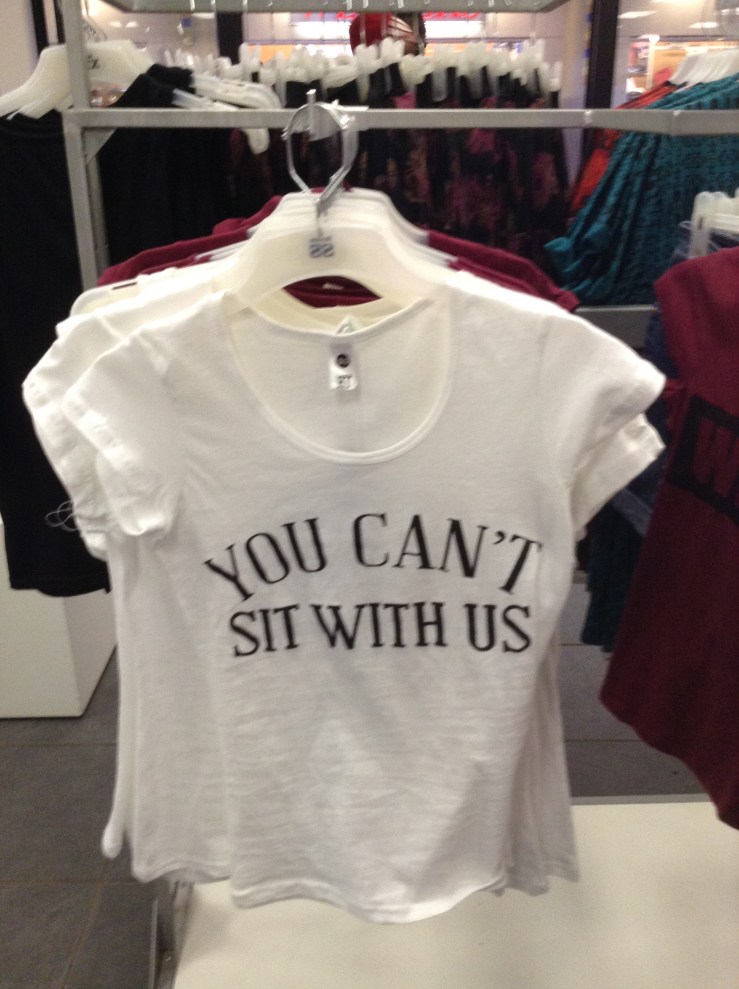
Love is stuck in a queue though, trying to help a friend wire money to Zimbabwe, and so I go shopping. In one of the cheap fashion chains, I spot a white T-shirt emblazoned with the words: “You can’t sit with us”.

I consider buying it and wearing it around Daveyton. Definitely a Chinese import.

At last Love is ready.

We drive back to Barcelona, his kasi.

“I can’t believe it,” his mum, Victoria Ralefeta, says, welcoming to her home with an enveloping hug. “Lerato said he had a white friend and I told him he must be fucking dreaming.”

I’ve never heard a black mamma swear before. I snort with laughter as she squeezes me.

Victoria invites us into the front room of her home, and offers us a seat on the lounge suite, in front of a TV switched on to Soweto TV. On the walls are 3D pictures of elephants, waterfalls and Jacob Zuma. If you shift to the right, the picture of Zuma morphs into Mandela. He wishes.

Victoria treats us to a bottle of Coca Cola, and tells us about her younger life, working as a domestic worker.

“How did you come to terms with apartheid during those years?” I ask. “What did you tell yourself to make it bearable in your own head?”

“I told myself it was a bad spirit,” Victoria says. “There are two people controlling our lives – god and devil. And devil is more powerful than god, if you allow him. Apartheid was nothing, just a bad spirit.”

Lerato takes us on a stroll through the neighbourhood. A woman is braaiing chicken feet on a corner. A barber is cutting hair in a converted portakabin. Bob Marley’s Buffalo Soldier is playing through an open front door. As we walk past the spaza shop, an amapanstula comes out.

“Umlungu!” White person! he shouts, dropping his peanuts to the floor and starting to dance.

Lerato is delighted.

“Everyone is going to be talking about this. I’m going to be the guy, who brought the white girl to the kasi.”

We make to turn left.

“Err, no, we can’t go that way,” Lerato says. “Too dangerous.”

“Oh right,” I say, a flash of fear grabbing my belly.

Lerato laughs. “No, not dangerous for you. You could walk anywhere here. No one would touch you. They’d be too busy staring.”

Back at the house we gnaw on chicken feet and drink Coke.

“You know life is a boomerang,” says Victoria. “I can tell you I don’t even have fifty cents in my house now, but I’ve got food. So why do I want money? Money for what? Money can’t change my life. As long as I can eat with my children, it’s fine. When suffering comes, the white people cannot handle it. We, us black people, we can handle it. The white people can’t take suffering, because the money is controlling them.”

Follow me on Twitter @writerclb

The walls of Cosmo City

IMG_0401

Written September 2014

Trevor Davies lives in a small three-bedroom house in Cosmo City. It reminds me of the house I used to live in Crystal Park in Benoni. Trevor and I went to school together, Benoni High. Trevor is white. He is married to Chrissie, a black American woman. Together they have three children.

Trevor and Chrissie met at university in Portland, America. It was a campus of 14,000 students, only 99 were black. There was virtually no racial integration and there had been incidents of racial intimidation, including black people getting urinated on. Trevor and Chrissie, both Christians, joined the Intervarsity Christian Fellowship which was on a mission to improve race relations on campus.

“I was highly aware of my place as a white South African,” remembers Trevor. “I remember going to a platform about being from Africa and being the only white guy, and feeling the weight of knowing my history, and asking what right I had to even be there.”

As they began to confront the issue of race on campus, what they realised was that there was no space where people could deal with their ignorance, and so they started a group called Race Matters, where people from all ethnicities could come together and ask any question they wanted. They would then break out into race-specific groups, try as honestly as possible to answer the question, and then share their insights back to the group as a whole.

“What we found was that white people had never thought about race. They had no thoughts on it. But as they started to hear the stories from the black and Asian participants, they started to feel guilt and shame and anger,” remembers Trevor.

Trevor admits he was one of them.

“I only became away of the story of South Africa because everyone in America knew it. I only knew what really happened after I came home in 2008 and went to the Apartheid Museum and sat down and watched the videos of people toyi-toyiing and protesting. We never saw that. We never saw that on TV. But the people in America, they had seen it all. Everyone knew what had happened in South Africa, but not me. I realised I needed to become aware.”

But becoming aware, Trevor admits, is not easy.

“It is jarring. Everyone else has continued on as if nothing has really changed. In Benoni particularly. I wrestle with that. I am judgemental towards those Benoni South Africans and their unwillingness to live in Africa.”

Trevor recalls a fight he had with his brother.

My brother was buying a house and it all worked out well and they felt like it was God who gave them that house. So then I was like, my friends are living in a shack in Zandspruit. They have been praying for twenty years for a house and still they do not have one. Do you think that God does not answer their prayers? The reality is that God did not get you that house. You got that house because you had a friend you knew who was generous who gave you the house at a discount and because you knew a banker who was able to facilitate the loan and a mom who co-signed for it. It was privilege that enabled you to get that house. But that conversation didn’t go down very well. “

“No, it didn’t,” says Chrissie, smiling and raising her eyebrows.

I ask Chrissie how it has been for her, moving to South Africa.

“A little insane,” she says, laughing. “Moving here was like going back to the fifties. Even going to Oregon or the west coast which is like the whitest part of the US, and being an interracial couple, was more welcoming than being here and having it gawked at and pointed at.”

Chrissie recalls their honeymoon in Kwazulu Natal. They were at Ushaka to watch the dolphin show.

“I was so excited to see the dolphins, and this lady kept looking at us, and for me, I was thinking, she must think she knows us. Then she made a big fuss and pretended to take pictures like as if she was at a zoo, taking pictures of some monstrosity, and I remember thinking: she’s really angry and she doesn’t even know me. This is the 1950s.”

One of the hardest parts has been how Chrissie is treated with her mixed race kids.

“I’ll be in the shops and people will say to me: “That can’t be your child, no. You must be the nanny. Are you the nanny? Is that your job? I’m like, do you really want to hear about her birth story and how many hours of labour I was in?” she says laughing. “On good days I just reply, yes she is. On bad days, I give them what for.”

I have to accept that my role is to teach and it is hard because it is my life that is on display. I can’t go to the grocery store and get milk without somebody saying something. It is a daily experience, especially with my most light-skinned daughter.”

I ask Trevor how living in Cosmo City has impacted on his own personal transformation.

“Do you still feel flickers of white superiority?” I ask.

“I think it’s always there. It’s a continuous wrestle to figure out what the truth is and to see clearly. As a family we deal with this stuff a lot. Our middle child comes home and tells us that she loves her mom, but she doesn’t like that she’s brown, she would prefer to be white and loves Barbie,” Trevor says.

“This is in our life all the time,” says Chrissie. “We are trying to work with our kids to understand who they are, their story…”

“I wrestle with it, should white people be given the grace that they seem like they need? I don’t feel like it,” says Trevor.

“What do you mean by grace?” I ask.

“It’s been 20 years, they are still living in South Africa and they haven’t really budged. They complain about how everything is done, how bad the ANC is, and blaah blaah blaah, a long sob story of how everyone has messed up this fantastic country that was built by them, while it was the black people who actually built it, they just made the plans. White people, will argue they worked hard to build the country. And they did. But the difference was, when they worked hard they were rewarded. Whereas those folks at Marikana, they are still working hard and still not being rewarded. That’s the difference.

“I feel like: how long does one need? If you are going to play ignorance forever, you are going to get the EFF in its full wrath, and it’s going to be a mess, and I think you’ve asked for that. And you are going to get it, and you are going to lose stuff that you really care about, because you have chosen to pretend. What is it going to take for white folks to realise that they live in Africa?

“You hear white folks say that I am begging to be African. Or that I am African. But,” and here he shorts with laughter, “they are completely disengaged which the struggles of Africa. They want to live in Bryanston, and live in Africa, and go to the bush. So… even at the church we go to, people are saying they want to change. We are trying to create spaces for people to actually talk about what it would take to engage well. Starting with relationships, getting to know people, simple things. People’s desire for this, is very low. Most folks are not really interested. They will ride the train when it’s the World Cup, when the train has been cleaned and painted, but otherwise, they don’t want to come here. They’re terrified.”

 

Silenced

IMG_0484Written June 2016

I was part of the last generation to grow up under apartheid. I am a white writer who interrogates my mind and soul about the myths of white superiority and racial difference. I probe. I interrogate. I make myself uncomfortable. I make others uncomfortable.

A year ago I finished writing a book, Lost Where I Belong, a memoir, extended essay, in which I investigated, over five years, why it was so hard for me to feel truly equal to my fellow South Africans, despite our democracy, our progressive Constitution, the promise of equality. The story is not just my own. I travel to the rural lands headed up by chiefs, I return to the claustrophobic streets of my suburban Benoni childhood, I walk the streets of downtown Johannesburg, gathering the stories of my fellows, the others, so many of us lost in transformation. The main thread of the story though is mine. The white soul is the one under the lens.

Lost Where I Belong is represented by a respected literary agent. The book has been read and considered by editors at the world’s top publishing houses. Again and again it has been commended for being “beautifully written”. Thank you. But the pretty words and sentences are not enough to switch on the printing presses. Why not?

In the words of one editor:

“It’s a book that really took a hold of me at times and nagged at me even when I wasn’t reading it.  This is of course because what she addresses is so potent and distressing but mainly because of the forensic honesty of her quest and her writing, her willingness to confront the apartheid within, to work through the fact that she is inextricable from the history.  The book has a moral weight to it that is inescapable and very affecting.  You will appreciate, then, I hope, that it is only with a great deal of personal regret that I’m writing to say that I can’t see a place for Claire’s book here.  The very honest truth is that I think it would simply be very hard to persuade a large enough audience to engage with it, even though I’m sure that those who did so would find it very powerful.”

The others concur.

There is not a big enough market.

People will not buy it.

We cannot make enough money.

White people will not spend money on something that makes them uncomfortable.

By chance I cross paths with a white liberal, South African struggle-generation journalist reads it. He reads the book in one sitting. The book makes him angry.

“Framing it chronologically as the odyssey of a wide-eyed, guilt-stricken innocent seems to me a grave mistake that is bound to limit its appeal and put backs up. Drawing attention from the start to how little you knew while you were growing up in South Africa, as well as how relatively little time you have spent there since you left, plays not to your strength but to your weakness. Your strength is the perspective your early experiences give you now, 21 years after apartheid, and that, I believe, is the book’s true subject.”

I am not permitted to write about ignorance. I am not permitted to write about a journey from ignorance to awareness. From being closed to being conscious.

Our transformation must happen off stage, when no one is looking, otherwise it is too humiliating, too angering, too shaming.

One should not speak of such things.

Silenced by the capitalist system. This book will not make enough money.

Silenced by the liberal system. We cannot admit to such things.

Silenced by the racist system. We must not break rank.

Only the victims may speak – because they will make us money. Only the victims must speak so we, the liberal saviours who control the publishing industry, will continue to look good.

Only the victims must speak so the world will stay polarised and all will be not well.

Jozi: a poem

13391564_10157048942160422_3179583930018148195_o

Written June 2016


Sundown behind glass towers

The old prison overlooks

Revellers contemplate pleasure

Against the fading of the past

Fires on the ramparts

Telkom blue

Transnet red and green

Ponte unseen

White light of mosque

Bruising sky

Chiselled on change

This city, my city

Pulsing, fluxing, revolting, becoming

An addiction, a habit, a comfort

A home


Untold stories.1

Written March 2014

The South African headlines are dominated by crime and corruption, protests and fear. But while those truths happen, so do other, unreported truths. Here is one of the other stories… 

Remo Bartels has been a farmer all his life. As a young man he farmed pigs, cattle and crops in Bergville in Kwazulu Natal and later moved on to biochemistry, selling chemicals and micro-organisms to improve soil health. Nowadays, he is helping to grow something even more valuable: the next generation of African farmers.

“Grain SA are hiring the white farmers who don’t farm any more and making them into mentors,” he explains.

Through the year Remo travels into the rural villages in the former homelands teaching farm skills. In the week that I met him, he had been in Njwezeni, a village outside of Mthatha teaching a group of young black farmers how to do on-farm repairs.

“I was one of those who said ‘fucking kaffirs, they are so stupid’, but doing this, I’ve realised: how can they have known when they didn’t have the knowledge? We weren’t willing to share our knowledge, so how could they know?” he says.

“Are all the white farmers backing this?” I ask.

“You get some of those who still have the old regime in them, but they themselves haven’t twigged on to the truth that knowledge is power and that there’s a bridge that needs to be built and then everything is going to actually come right. We have to put our pride in our pocket for a while. The future is in our hands. It’s what we do with it right now.”

There is fiery passion in his voice. He leans forward and his eyes glint as he speaks.

“Are you welcome in the villages?” I ask.

He nods. “I think coming to where they are in the villages, cuts out a lot of fear. It shows them that I don’t want to be a dictator. At the end of the week we give out a questionnaire and 90% of them say this is what we need. This is how we will get over the hatred of the past.”

He tells me his favourite story. It is about an old man at one of his first training courses who said: ‘you can’t teach me anything’. Remo encouraged him to give him a chance. That week Remo was teaching the business of farming, how to make your land more profitable. He demonstrated that if you have 3 hectares, and plant only maize, selling that maize for R3,000/ton, you can only ever earn R9,000.

“You can’t live on that,” he says.

But if you plant one hectare of maize and keep 2,000 chickens on the other two hectares, using the maize to feed the chickens, you can sell each chicken for R20, making a total of R40,000.

“The old man knocked on my door at the end of the week with his daughter’s laptop. He wanted my spread sheets so he could put together a business plan,” Remo says with a huge grin.

“How far is Njwezeni?” I ask.

“About half an hour from here,” he says.

I follow Remo’s Mobile Training Unit through the crowded streets of Mthatha, tapping my fingers on the steering wheel as the thumping tunes of the taxis pump through my open window. It is Friday morning, and the city is already filling up with busy shoppers buzzing in from the rural areas. We leave the city on the Port St Johns Road, and head into the rounded, green hills to the south of the city, taking one last dirt road down into a valley, over a river and then up to Njwezani, a quiet village spread across the crest of a hill. Six young farmers, aged between 22 and 30, are waiting for us at the kraal of Leonard Nondogna, a local farmer who has opened his home and his garden for the course. Lying in the yard is a rusty old Massey Ferguson tractor, in pieces. This week Remo has been teaching welding, workshop skills and farm equipment repairs. The tractor, which has not worked for five years, has been one of their projects. They have welded it and rebuilt the bonnet. Yesterday the farmers clubbed together and gave Remo money to buy spray paint. Today Remo is going to show them how to use the compressor.

Remo changes into his paint-splatted overalls and introduces me to the farmers. They are all shy and speak only a few words of English. They all push 27-year-old Sithembile Vava to talk.

“I like farming,” he says. “Life is not easy. You need to work and produce something. I encourage young people to co-operate so they must know themselves how to deal with life.”

“Will this course change things for you?” I ask.

He is sure. “From today, there will be no crime around here. These guys promise that they will go out and teach the other guys. We will benefit a lot from this.”

Nosiseko Margaret Nondonga, Leonard’s elderly wife comes out to greet us. She is also delighted about the course.

“This is giving them hope and opportunity. They are learning to work with their hands, repair things that were broken without spending money,” she says with a wide smile.

Mrs Nondonga and I sit down on an old wooden bench in the shade of a green rondawel. Her granddaughters, six-year-old Esinako and five-year-old Mihlali clamber onto our laps.

Remo switches on the compressor and the young farmers frown in concentration, listening to his instructions, taking it all in.

He makes a few slow, careful lines with the spray paint, and then hands the spray gun over to Sithembile and stands back.

Sithembile takes over, moving slowly, deliberately, with concentration.

Before our eyes the tractor is being reborn. Its grubby, dirty exterior is being transformed into a cheery, cherry red. The granddaughters clap their hands and giggle with delight. Mrs Nondonga laughs.

I laugh too at this amazing sight: an old Afrikaner helping a young black farmer paint over the past.

On whiteness

IMG_0357Written January 2016

Whiteness is new. It didn’t exist in conversations or in the press before 2015. It has been birthed by a new generation of left-wing South African youth who regard the state as an unholy alliance between the last of the revolutionary leaders and multinational capitalists, whose priority is to feed the foreign investors and political fat cats at the expense of the poor.

Whiteness is used pejoratively to describe and critique the privilege of the white-skinned population.

Why not just use the word white?

Well, because whiteness comes in different shades, different strengths.

Absolute whiteness is equated with absolute privilege. These are the people who drive BMWs, take overseas holidays, work in mining, send their children to private schools, live in gated communities, never set foot in the city centre, have never been to Soweto and never intend to. Absolute whiteness exists in an absolute bubble of absolute privilege. It is an extreme which does not describe the lives of all of the 9.2 million white South Africans. (And which also describes the lives of some black South Africans. However.)

A paler shade of whiteness exists in the ordinary white: the person getting by on an average salary, who drives a small car, who do not own swathes of land – maybe just a little house in Westdene – and who feels they have neither economic, moral nor political power.

When those whites South African try to deny their privilege, the rebuff is that they still have whiteness because of the system.

When something goes bump in the night, the police come because they are white.

When traffic cops are pulling people over, they do not get pulled over.

When they run out of money, they know what to ask the bank manager to lend them some more.

Ordinary whites have whiteness because they understand the machinery of the capitalist system, because they are part of an extended network of people, among which are definitely people who would be able to bale them out.

To have whiteness is to have a safety net.

Even though they might argue, they don’t feel very safe.

But still, comes the reply, you are still safer than me.

And so, regardless of your circumstances, if you are white you are guilty of whiteness.

Guilty, of course, because whiteness is not a nice thing.

Well, that is not quite correct. Whiteness is a nice thing in that it harbours enviable things like a BMW, private schooling, a good job in mining, a nice home and a safety net.

But it is a bad nice thing because it is not an earned thing. Whiteness is a privilege that has been acquired unfairly, through a political system that oppressed black people, that stole land, and so although the trappings of whiteness are desirable, whiteness itself is despised, and right now it makes everyone feel uncomfortable. Especially whites.

Because well, the things is, in the same way that not everyone who has been a smoker gets throat cancer but everyone who gets throat cancer has been a smoker; so not everyone who is white has complete privilege, but everyone who has complete privilege is white.

And on an average day, in an average street, there’s no way of telling the cancer patients from the non-cancer patients.

Everyone looks sick.

Everyone looks white.