The human race is on. Don’t come last

261922_130127690402904_5789768_n

In the middle of last week I hit the wall. I know the wall well because I’ve been here before. A lot. There were a few obvious reasons why I went splat. I was exhausted after co-facilitating an intense Women’s Day Consciousness Café. I was sad because I had just waved my mum off at the airport after spending a few days together. And I was lonely because my husband was all the way over on the other side of the world.

“Many fears are born of fatigue and loneliness,” my husband says gently, whenever I go splat – a line from the Desiderata – but it wasn’t fear that was gurning around inside my head, but rather an abyss-like what’s-the-point-of-it-all emptiness, accompanied by that old voice: “You are a failure”.

Ugh. Back here. Again. That evening, after dragging my sack-like body to a yoga class, I came home and instead of listening to the chiding and goading, I decided to research why I was here again. What was the link between depression and that pointless feeling?

As I read through psychology articles, I came across a paragraph on PsychCentral.com that hit me in the belly.

“How can you increase your sense of ‘worth’? You cannot earn it through what you do. Happiness is not obtained solely by your achievements. Self-worth based on accomplishments is ‘pseudo-esteem’; it’s simply not the real thing”.

I put down my phone and stared at the wall.

Since I left home at 17, I have associated my value as a person with what I do. And those who know me, know I do a lot. Always a project on the go, always building networks, always connecting with friends, always doing. Somewhere in my mind – pretty close to the surface, in fact – is the belief that if I do good things, then I will matter to the world. And that if I don’t, I won’t.

The article went on to explain that those who measure their self-esteem against achievements are constantly having to do more to try and have any self value at all. This constant chasing of self-worth linked to praise and achievement leads to a never-ending cycle of excitement and disappointment. And burn out.

Which is where I was now. On the couch. Barely able to lift an arm.

Over the past five years, I have been drawn to meditation and Buddhist teachings as a way of coping. A sentiment often offered up for reflection is: “We are human beings, not human doings”.

It’s a teaching that I thought I had understood, and applied. But in that moment I realised  that I had been applying it through my own particular pair of lenses.  In order to embrace more being, I had decided that I had to do more relaxing things – more meditation, more yoga, more playing in the sun. But, of course, to interpret it like that just adds more ‘doings’ to the value equation, growing the list of things to value yourself by. Meditation. Tick. Juice. Tick. Sunshine. Tick. God, I rock!

So what does the teaching actually mean?

According to the psychology article, for the good of our mental health, we need to look inside ourselves for our self-worth, valuing ourselves not on what we do, but who we are. Are we kind, loyal, creative, strong, patient, graceful, funny, thoughtful? Choose your good (we’ve all got a few of them) and value yourself on yourself, not on constantly shifting goal posts outside of yourself. That’s not to say we shouldn’t do challenging and exciting things with our lives, but we shouldn’t ascribe all our value as a person to those things.

It was a light-bulb moment for me. I’m still contemplating it – how my wonky sense of self-worth links to my upbringing, my culture, and our world. I grew up in a Yorkshire family in apartheid South Africa. In the 18th century Yorkshire was the heartland of the industrial revolution, and I am a descendent of workers. In my family, having a job, being a provider, is fundamental. I was weaned on the idea that you cannot have pride or dignity if you cannot provide for yourself. “You need to stand on your own two feet, lass.”

And I’m not unique there. We live within an economic system which has competition at its core. The human race is on. Don’t come last. Capitalism firmly equates our value as people with what we do. But it’s killing us. It’s the reason I keep falling on my face with exhaustion and disappointment.

For too long I – and so, so many others – have relied on applause for our self-worth, when what we really need is a wee pat on the back from ourselves. Mine, for being a kind and honest soul.

That is good enough.

Follow me on Twitter @writerclb
I feel liberated – thanks to the ANC

WP_20160807_003Dear ANC

What an election! Best TV in ages. Hope you gave some of that R1bn to the SABC for its local content procurement.

Now, I know you are wondering what happened, so I thought I’d save you spending even more money on hiring consultants and write you a letter.

And let me start off by saying, I am still grateful to you for the liberation struggle. Benoni in the 1980s? What a shithole. You could hardly breathe for the stifled air. Downtown Joburg of 2016 is a place of creativity, dynamism, humour, amazing fashion. Right now, Joburg is one of the most amazing cities on earth. Your man, Parks Tau has done a pretty decent job – especially for a middle-class lass like me.

Which is why I was really confused about who to vote for. For much of the past 22 years, I quietly offered you my respect, patience and hope. I would defend you to the racists of this country. I was on your side, even though you never noticed. But recently, with every Number One cackle and corruption scandal, every attempt to dismiss us, silence us, play us off against each other, you have dulled those shiny emotions.

Thing is, I am angry with you. Really angry. I am angry with your love-affair with foreign capital – western, Guptan, Russian and Chinese. I am angry with your inability to create jobs and lift people out of poverty, perpetuating inequality, resentment and crime.

Why are we not promoting a decentralised solar power industry? We have so much sunshine. Why have you not pushed through with land restitution so that people can have dignity again and we can really begin to put the past behind us? Why are the majority of schools in the township and rural areas offering sub-standard education? Why are you not doing everything you can to prove the racists wrong and show just how brilliantly a black man can run a country?

To me, it’s like you have morphed into another elite in a country which already values elitism over humanity.

So, as you can imagine, I felt it was time that I did not offer you yet another vote of thanks for freeing the country from the claustrophobic oppression of the apartheid state. That instead, I stood together with my fellow South Africans and offered you a lesson, which is this:

We are not your people, as you so often like to say. You are our government. And like you, we too love this country. It’s our home, and we want to make it better – together.

So I am thrilled that our metropolitans are going to have to be run by coalitions, where politicians will actually have to work together. I feel energized, enlivened and… well, liberated. So thanks again. And best of luck with the coalition talks.

Claire

PS. I heard Mantashe say that low voter turnout had worked against you. You do realise that not pitching up, is kind of the same thing as pitching up and drawing a picture of a showerhead on the ballot paper?

Follow me on Twitter @writerclb


Is culture just a polite word for power?

WP_20160801_006

Last week, while having breakfast with a French friend at her home in France, I filled a croissant with scrambled eggs and ham, and tucked into it, sandwich style. My friend looked at me as if I had just bit into a baby.

“That’s not done,” she said.

“Well I am doing it, so it can be done,” I replied.

“Well yes, but we don’t do it. It’s not French.”

A little story. Une forte mentalité. For the past 15 years I have quietly rubbed up against the French, learning their language and often visiting the country. My frisson began with admiration. France seemed a much more cosmopolitan reality than the one I had been born into – a working class Yorkshire girl who had been chucked out of England and into apartheid South Africa by Margaret Thatcher’s iron fist. Who were these sophisticated, exotic creatures who treasured food and style? I wanted what they were having.

But as the years went by, and my fascination with cheese dwindled, something else began to grate. The French have a favourite expression.

“C’est normal,” they say. It’s normal.

They use it to describe why some things are difficult (convoluted French bureaucracy), why some things are fabulous (an entire supermarket aisle dedicated to cheese) and why some things are just not worth commenting on (another glorious day of sunshine).

“C’est normal” is the punctuation mark used to put a stop to any conversation that raises an eyebrow at French culture. And to a person who came of age with the end of apartheid and the fall of the Berlin Wall, “C’est normal” is like a red flag to a bull. My only normal is change and more change. Which is perhaps why France was so attractive for a while. The lure of a solid, sure-of-itself culture.

Last week then, as I munched on my croissant, and my friend dropped into the conversation that hers was one of the bon families of France – and by bon, she meant wealthy, respected and influential – I found myself wondering: is culture just a polite word for power? A pretentious way of saying, I’m in, you’re out?

I started a dialogue with myself in my head. What does culture give you when you embrace it? A shortcut to who you are. (This is how I eat a croissant). A sense of belonging. (This is how we eat croissants). A shortcut to who others are. (They are just like me, look how they eat croissants)

And there’s no doubt that us humans like shortcuts. In his brilliant book, Thinking Fast and Slow, psychologist Daniel Kahneman (who was co-awarded a Nobel Memorial Prize in Economic Science in 2002 for his work on psychology of judgement and decision making) explores in detail how the brain doesn’t like to do any more work than it has to, always setting up easy-to-access short-cuts to help us navigate the world and thus survive.

And then I wondered: what does culture take from you when it stares you in the eye and declares: “hey you, you are not one of us”?

Can culture take from you the same thing it gives: robbing you of your sense of self, sense of belonging, a sense of feeling connected to others?

It’s unpopular to say this now, but at the outset apartheid was envisioned as a way to create a society where different cultures could flourish side by side. Where it got it horribly, drastically wrong, was in the way Afrikaner culture treated those outside its culture – with disrespect, hostility, brutality, inhumanity.

Confucius wrote: “Behave to every man as one receiving a great guest.”

What kind of country would South Africa be, if we treated those who are not of our culture, with grace, interest and respect? If culture was not used as a means to wield power and exclusion?

And one wonders the same about France. Right now the country is in a State of Emergency. It has become a prime target for IS-inspired killers, and to date, nearly all of these men with guns are French nationals.

Why are these men attacking the country that raised them? Is there something within the culture of the country that they have grown up in that has undermined their sense of self, of belonging, of feeling connected to a wider community?

This is not an essay on the value of homogeneity. In nature beauty exists in diversity. The most beautiful forests are those in which different trees grow side-by-side and small flowers flourish in their dappled light. But rather I find myself pondering, how do we shape a world where not only do we aim to treat each other as guests of honour – but where it is possible to act with such grace?

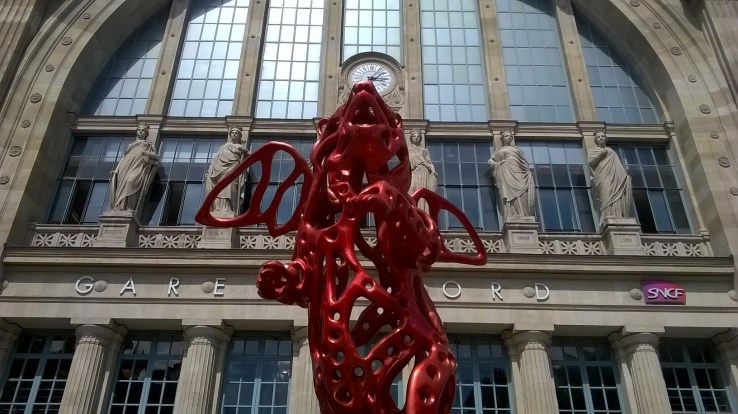
I held this question in my head on a train from Marseille to Paris at the end of my French holiday. I waited for my next train in a café outside Gare du Nord, where Romany gypsy girls spend the day begging. Dressed in flowery skirts and headscarves, they thrust their cupped hands at everyone passing by, stabbing their palms expectantly with their finger. Between begging stints they laugh and chat aimlessly, like young women between customers in a clothing store.

Watching them beg, it struck me that the crisis between cultures often comes when one culture demands or expects something of the other. When one is no longer content with being treated as a favoured guest, but begins to set an agenda.

I mentioned this to my husband and he told me a story he had heard about a Bedouin tribe. In the desert in the days of old, a traveller was welcomed into a camp and could have anything he wanted for three days. The wife included. At the end of those three days, the host could kill him. It was the caveat that made sure that no one ever abused the hospitality of another.

I thought back to my visit to my French friend. Her older sister had railed against those Muslims who abuse the French social welfare state by not working, having many wives, expecting the French system to support them and their families. Her big brushstroke views had made me squirm with liberal discomfort, but whatever the truth or falsity of the accusations she was making, her voice was unmistakable: a voice of anger and resentment. The host whose hospitality had been abused. She was on day three and ready to attack.

For a long time the liberal left have kept clear of talking about what happens when cultures collide – that was reserved for the right-wing racists. But as Europe (and many places throughout the world) finds themselves on a knife-edge, perhaps its time we all posed ourselves these two questions:

Am I being a good host?

Am I being a good guest?

After all, we’re all just passing through.

Follow me on Twitter @writerclb

Shattered pasts

Screen Shot 2016-07-24 at 13.41.39

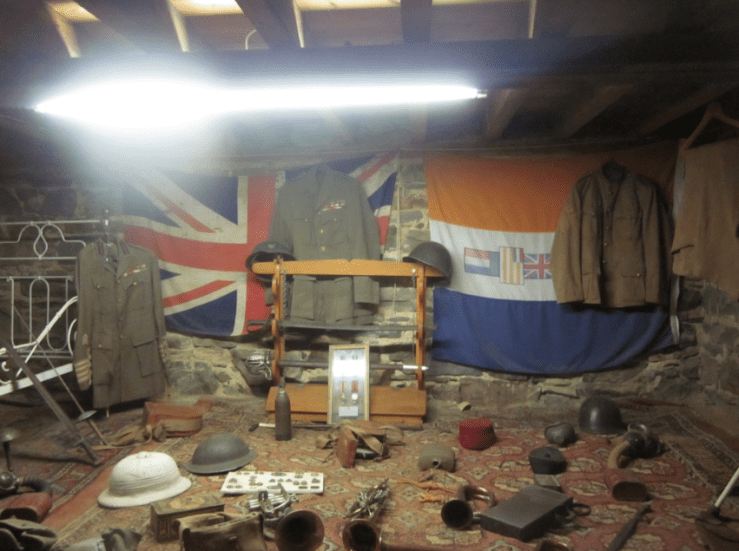
(South African war relics, Marie Rawdon Museum, Matjiesfontein, Karoo)

A few years ago, while tapping away on my laptop during a flight to Cape Town, the woman sitting next to me asked me if I was writing a book.

I was. She asked me what it was about. At the time, my answer changed, depending on who was asking. I decided to give this 60-year-old white South African woman the long answer.

I had been an Open Society Foundation fellow. I had spent three months in the old Transkei investigating what democracy had – and hadn’t – brought to rural South Africa. During that journey I had run headlong into my own fears, prejudice and ignorance. I was writing a book confronting the racist shadows in me, a 38-year-old English-speaking South African.

“Would you read it?” I asked her.

She sighed.

“It’s very difficult for me to pick up one of those books and read,” she said.

“Why?” I asked.

“Tangled emotions of guilt and regret and deep, deep sorrow.”

I waited quietly, waiting for her to say more.

“We’re in a bit of haze, perhaps we’ve had to develop that to survive. I’m sorry that we are so dulled, that there is a dullness of interest, it’s just as though…” she thought for a while, “I think we had to fall asleep. For survival. To live with guilt and regret is too painful.”

Her words echoed something I had read in Jonathan Jansen’s book Knowledge in the Blood. In it he discusses Shattered Past, research that examined the behaviour of post-war German communities. The research found that even after communities had come to have direct knowledge of the killings and torture of Jews, “the majority of the population rather preferred to cover its own complicity with merciful silence”.

For close on twenty years many whites South Africans acted similarly. Silence was the norm and when you did address “it”, it was often reduce to two words: “white guilt”. Go out of your way for a black person and a colleague might mockingly chide: “white guilt!” Turn away from a beggar, pretending that neither of you are there, and your conscience would taunt the same. Try raise the topic of apartheid and its link to poverty, poor education or crime at a braai, and the reply would be: “Enough of the white guilt already.” White guilt didn’t like to chat.

Recently, I found myself reflecting on how the conversation has shifted, how 21 years later, silence and white guilt are no longer in charge. Since late last year, “whiteness” and “privilege” have become the new buzz words, and the uncomfortable thing about these new labels are that they are being put upon us. People who are not us are describing our behaviour, defining our ordinary, every day, sometimes shitty, sometimes amazing lives as a stolen good.

“How dare they?” come the retaliations. “How dare they judge us? After all, we all know how the thieves are around here, don’t we?”

Oh yes, the dialogue is shifting. Our culpable silence is being broken, and white South Africans are feeling exposed, defenceless, uncomfortable.

What are we supposed to do now?

Well, if the Shattered Past research is anything to go by, what is happening now is very similar to what happened in post-war Germany. Just over twenty years after the end of the Second War, as the old Germans begin to die, a space opened up for a new generation of thinkers and writers who were able to observe the past with a new critical consciousness.

Cue – in South Africa – the Frantz Fanon, RhodesMustFall, EFF generation.

And if we keep drawing the parallel, what the Shattered Past research found was that “the capacity for perpetrators to change arose only after the political elites recognized more than one pain and ‘the link between the suffering of the victims and the perpetrators’ was established.”

In other words, for society to heal, it had to start setting aside some compassion for the bad guys.

In post-war Germany, the blanket of silence had meant Germans had been stopped from processing their own war wounds: the rape they had suffered at the hands of the Russians, the death of their solider sons, the intimidation and fear culture that had been Nazi Germany. Yes, the Nuremberg trials (Truth and Reconcilliation Commission) had held those with actual blood on their hands to account, but the rest of the Germans had been left alone to deal with their losses.

In 1960s Germany, the new youth consciousness heralded a phase where the personal losses and griefs of the past were permitted to be aired and dissected.

And I find myself wondering: is that what South Africa needs too? Do those white South Africans with their fortress houses and 4x4s who don’t seem to give a fuck about anyone but themselves, need to be given an opportunity to express their unresolved pain?

Admittedly, it’s often hard to feel anything but contempt for some white South Africans. On Valentine’s weekend I was at the Vaal River and felt like washing my hands of any further attempt at inter-racial healing as I witnessed the selfishness of those white South Africans, with their jet skis and speed boats who drive drunk and reckless on the river without a care for anyone but themselves. How does one even begin to have compassion for people who seem to treat the world as just a giant playground, hoarding all the toys? Who are these people?

But later, as the sun set over the river, and I connected once again with the deep peace of the land, I also found myself wondering what lurks beneath all that bravado and shiny toys and heavy drinking?

In his book Jansen remembers how destitute the white Afrikaners were at the end of the South African War. They had been chased from Europe because of their religious faith, and then they had been defeated again on this new soil as they had tried to build a new home. Out of this defeat they rose again, this time determined to create a nation that no one could destroy, and they lost control of that too.

What lies inside people who have lost and lost and lost?

Follow me on Twitter @writerclb

The noise of the world is made of our silences

IMG_0258

Why do I write about race issues? Sometimes I think I am crazy. Sometimes I am sure of it. Why admit to and reflect on dirty prejudices that haunt the shadows of the mind? It’s probably safer to poke a snake with a stick.

I found myself reflecting on this, this weekend, while reading All Quiet on the Western Front, a book that documents the horror of war and that was banned in Germany in the lead-up to World War 2 on the grounds that it painted Germans in a bad light.

For twenty years, South Africans subconsciously banned talking about racism. There was a collective belief that it didn’t support our Rainbow Nation’s war effort, namely the fight inside ourselves to forget the past and move on as quickly as we could.

That’s not to say people weren’t branded racists. “Racist!” became the punctuation mark to end any unwanted conversation. It was the silencer of choice used to quieten any unsolicited criticism, often of the government. But there it got stuck, at the level of insult, never probing, never advancing any deeper understanding.

That is, until March 2015, when the Born Frees woke up and called us on it, adding whiteness and privilege to the concepts to chew on.

The other day, a white woman from Kempton Park asked me to explain #RhodesMustFall and #FeesMustFall.

“What do they want?” she asked.

I explained that because of income and education disparity, begun by institutional inequalities in the past and perpetuated by inequalities in the present, many black people continue to feel second-class citizens in their own country. Locked out.

“But it was hard for me too,” she said, going on to document the years of strife as she worked two jobs to pay her way through university, clawed her way into male-dominated work spaces, struggled to get promoted, be recognised, be seen.

“Then you understand,” I said.

One of the greatest crimes of apartheid was that it taught us not to have compassion for people who do not look like us. Compassion was for the person who sat next to you in church. Pity was for the maid.

We are still stuck here. We may shake hands, call each other bra and dance with petrol attendants, but we are still clawing our way to the place where we see each other as people.

That’s why I write about race relations. Because if I stand naked, and lay myself bare, you’ll start to see me. And we may start to see each other.

Follow me on Twitter @writerclb

Why the old Transkei?

Lost Where We Belong is my non-fiction book that explores the legacy of apartheid and the difficulty of transformation of the human soul, written between 2010-2015. I have been reading excerpts from the book on the streets of Joburg. After a reading in a small park overlooked by the Nelson Mandela Bridge, Bismark Matsheza shared his thoughts.
If you want to hear the reading, keep scrolling. Please share in your networks.

Transcript of interview

Me: What does it make you feel when you hear me read this?

Bismark: I love that you are trying to bring out the South African history, what used to happen.

Me: Does it make you want to read more?

Bismark: Yes. Actually, I wanted to ask you, did you write this?

Me: Ja, but I can’t get it published.

Bismark: Why?

Me: They say there is no market for a book written by a white person that confronts racism.

Bismark: That’s not good. Why would they say such a thing?

Me: They say the topic makes people too uncomfortable and that white people won’t read it.

Bismark: Why?

Me: Because it’s too uncomfortable and upsetting and it makes people feel bad. And so people won’t spend money on something that makes them feel bad.

Bismark: But you are saying what happened, so… right? You are talking about what happened. I’d love to read the book. I wonder why they say that?

Anthony (cameraman): Are they afraid of the truth?

Me: I don’t know. I was told my one of the South African publishing houses that there is no market for this. Penguin Random House says there is no market for this.

Bismark: But did they read this too?

Me: No, they read the first three chapters and said there was no market.

Bismark: Who else has looked at it?

Me: Two South African publishers and about fifteen international publishers says there is no market.

Bismark: So what are you going to do?

Me: This is it. If the establishment doesn’t want to listen, let’s take the story to the streets.

Bismark: That’s a good idea. There’s some people who doesn’t know what happened. I think what you are doing is good.

Me: Thanks, it’s great to hear. This is the first moment I’m doing it and I was wondering if it was boring you.

Bismark: Like I said, was supposed to go and buy something but when you started reading I was like, okay… so that’s why I remained sitting here.

“I am discontent with the second-hand diet of fear that I am being fed from afar…”

“Why the old Transkei? I thought it would be a safer place to probe at my scars…”

Follow me on Twitter @writerclb

Thoughts Must Fall – a rethink

ZMF

The great thing about writing a blog is that it makes you really think about your thoughts. Not just before you write – that, you’d hope, would go without saying – but once they are out there for the world to see. Writing a blog is a bit like walking around with your pants down – everyone gets to see what you’re made of – and you find yourself wondering what so-and-so would think if they read it. It makes you start a dialogue in your own head and with that comes the possibility for further shifts of the mind and heart.

Recently I wrote a blog titled “Thoughts Must Fall”. It was a critique of a critique, and a few weeks later I doubted myself and took it down to reflect on what I had written.

So what had I written?

When the #ZumaMustFall protests gained momentum in December 2015 – with marches in Joburg and Cape Town scheduled for the Day of Reconciliation, a national public holiday – a UCT professor called Adam Haupt had written a Thought Leader piece titled – “Whose Hashtag is it anyway?” – arguing that #ZumaMustFall was cultural appropriation. Haupt’s argument was that the hashtag #MustFall was the property of those within the #RhodesMustFall and #FeesMustFall movements, a voice of the youth that was riling against a status quo which benefitted so few at the expense of so many.

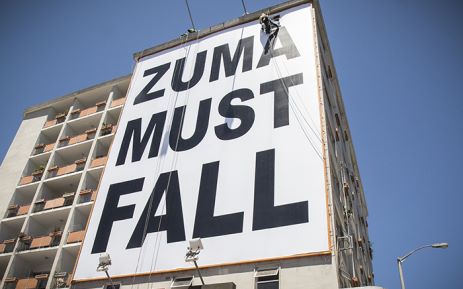
Although by the time of the marches, everyone in the country, regardless of race and age, was pretty much sick to the back teeth of President Zuma and the allegations of state capture and misappropriation of state funds, the #ZumaMustFall protests, at least in Cape Town where Haupt lives and works, was seen as being led by moneyed white South Africans. (Later in January, someone even paid for a gigantic #ZumaMustFall banner to be printed at an estimated cost of R200,000 and hung – without municipal permission – on the side of a Cape Town building.)

Up until then, the #MustFall protests had been directed at people like them – people with what Haupt describes as unearned privilege – and for them to use the hashtag as their own legitimate voice of protest was deemed a form of cultural appropriation.

So what is cultural appropriation? It’s quite a highbrow insult that gets a lot of airing in wood-panelled lecture halls and contains in it a belief that it is wrong to take the icons of someone else’s culture, either for profit, or even, for fun or aesthetic value. So it’s wrong for young women at music festivals to wear feathered Indian headwear since they don’t understand its deeper spiritual, significance and it’s wrong for a fashion designer from Europe to make fashion items using blankets from Basotho culture. They are not yours. Leave them alone.

Woven within the subtext of cultural appropriation is a narrative about power, especially economic power. If I am from a culture or group of people that at some time in history has ridden roughshod over your people, and/or if I am from a group of people who is seen as more financially dominant in world economy scales, then I most definitely must not profit from your stuff. To do that just perpetuates the inequality and stops you being seen.

Haupt’s argument about #ZumaMustFall really irked me, and not just because I find cultural appropriation the most joyless concept on earth – what, no more fancy dress parties? no more pretending to be someone you’re not? – but because it struck me as a subtle form of prejudice that was trying to silence those with what he terms unearned privilege – ie. white people – from exercising their democratic right to protest. It seemed to suggest that the only legitimate and justified form of protest could come from those who feel marginalised by the current system. And it also pre-determines who is marginalised by that system, and on what grounds they are permitted to feel marginalised.

According to his analysis, the authentic marginalised voice is one that is, or sees itself, as outside the fruits of the economic system, fruits that were unfairly grown from an unjust past. If you have fruit but still feel angry, you should think again. You can’t be legitimately angry until you’ve properly understood how your fruity life is built on the fruitless lives of others, and until you’ve started to take their cause as your own.

And yes, it might sound rich coming from me, sitting at my MacBookAir, tapping away in my nice Melville garden cottage, but is that really all we are? Economic beings? The means of production? Is it not possible to feel marginalised if you don’t see yourself represented in, and even locked out of, the political establishment – as many white South Africans feel? Is it not justified to feel cheated and angry if the tax money you pay into the state every year is being corruptly misappropriated by your president? If we accept that in a democracy there is a multiplicity of beliefs, desires and needs, is it not possible to protest on the grounds that your particular needs are not being met?

To his credit, at the nub of Haupt’s argument was a call for #ZumaMustFall protestors to more deeply engage with the “black burdens” (his words) that are fuelling the #RhodesMustFall and #FeesMustFall protests. If we are ever to truly create the groundswell of power needed to topple the political fat cats, the haves need to understand and get behind the have-nots. They can’t just cry their own tears.

But really, using cultural appropriation as a means of encouraging dialogue? It’s like knocking someone on the back of the head with a copy of The Communist Manifesto, and shouting “Think again!”

Why then did I take down the piece I had written? Well, because I kept on writing to a place where white people so often go when they feel that their points of view are not being understood – I went on to a place of fear.

It’s a habit in us. Whenever we feel that we are being taken to task or held to account by black South Afrians, we don’t just argue back, we get angry back, and quickly on its tail comes fear. So my argument went that Haupt’s economic reductive analysis is a limited version of humanity (still agree with myself), and that it’s a subtle form of prejudice and we must remember that prejudice can be as deadly as racism (and although I agree with myself here, I’m not sure it was necessary to go here). Look what happened to the Jews I argued. They did not have structural power in Germany, but they had economic power. So does this mean that the Holocaust was racist, or was it prejudiced?

Stop.

How did I get from university students calling for change to the Holocaust? This is what we – white South Africans – do. First we disagree, then we become fearful and start warning people.

It is time that we began to reflect on this habit, because it is a habit, an old one, engineered in us by our apartheid past when we were fed on a diet of ‘swart gevaar’. Little has been done to undo that conditioning, and if anything, the violent crime that the country has experienced post-apartheid has actually deepened many of those fears.

And yet there is a big difference between a criminal and a protestor. Between someone with a different viewpoint to ours, and someone who actually wants to harm us. If we want to live a truly fruitful life in South Africa – a life that is not just economically fruitful – we need to start interrogating these old fears.

After all, as one black writer I know once said to me: “When has a black man ever invaded a white man’s country?”

Follow me on Twitter @writerclb

Fear and self-loathing in Hillbrow

Last week I took to the streets of Hillbrow to read from my book, Lost Where We Belong. In this video I’m sitting on a pillar, reading a chapter about white fear to a guy from Nkandla (not Jacob Zuma) who was standing on the street corner chatting with a friend.

Afterward the reading I asked him what it was like to hear a white woman speak honestly and openly about her fear of black male strangers.

“Did it make you feel angry or hurt or sad?” I asked.

“All of those things,” he said, clutching his arms across his chest

“I’m sorry, I didn’t want to upset you. I wrote this book so we can talk about what is there.  We all know these things are there, but we don’t want to talk about them out loud. We’ve been so busy focusing on the Rainbow Nation, it feels like we’ve been sweeping the truth under the carpet. I feel that if we can start being more honest with each other, the past will have less of a hold over us.”

“It’s good,” he says. “Difficult to hear, but good you are doing this.”

Follow me on Twitter @writerclb

How to kill a watchman

WP_20160704_001

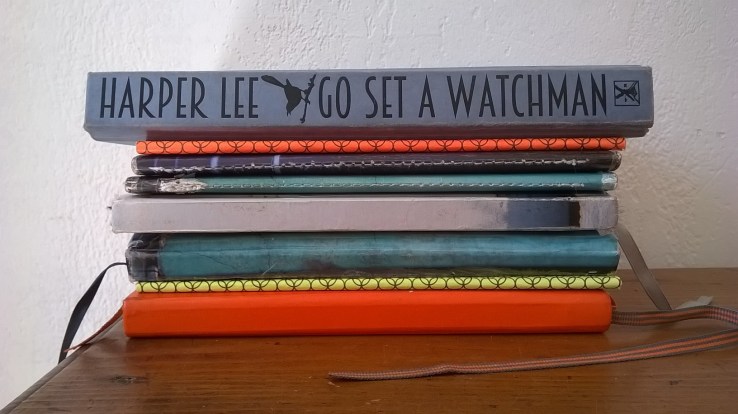
Just over a year ago, Go Set a Watchman, the sequel to Harper Lee’s To Kill A Mockingbird , was published. I remember the furore with which it hit the world. Newspaper headlines were thick with the tale of how this old manuscript had been found in a safe by Harper Lee’s lawyer, how Lee was now frail and unsound of mind and the lawyer had published against Lee’s will. On and on it went, with speculation, gossip and hearsay.

The story of the book trumped the story in the book.

At the time I didn’t ask myself why. I’m not a big fiction reader, preferring non-fiction, and so a year went by before I got around to reading it. I read it this weekend in one sitting and as I read I felt a fury well up in me, not at the content of the book, but at the fact that the real story of this book had been so blatantly ignored by the media who had devoted pages and page to covering its release.

So what is the book about?

The Guardian believed that “instead of clattering towards virgin territory, [the book] carries us, bewitchingly, deep into the past.”

The Wall Street Journal commented that “For the millions who hold [Mockingbird] dear, Go Set a Watchman will be a test of their tolerance and capacity for forgiveness. At the peak of her outrage, Scout tells her father, ‘You’ve cheated me in a way that’s inexpressible. I don’t doubt that many who read this novel are going to feel the same way,” sneers the journalist.

The Telegraph, the bastion of British conservative newspaperdom, didn’t even bother to find out, publishing a piece headlined “Why I Won’t be Reading Go Set a Watchman”, arguing that “what [readers] discover will make many of them sad”.

Business Insider, another UK publication, also dedicated a whole article to the musings of a journalist who refused to read the book: “I don’t want to see one of American literature’s greatest heroes turned into a racist,” she wrote, adding that ‘Gregory Peck is a total babe in the 1962 film adaption as a socially conscious lawyer, complete with three-piece suit and glasses. Racism just wouldn’t become him’.”

So for those of you who may not remember, To Kill a Mockingbird is about a white laywer in Alabama who comes to the defence of a black man who has been unfairly charged with rape. It’s about the white hero, taking on the system, and winning.

Go Set a Watchman is set about 20 years later when the white hero has become old, arthritic, and when his daughter – who had always put him on a pedastal – comes face to face with the fact that her liberal dad actually thinks that black people are less educated, that they don’t have the same values, that yes, they should have equal rights, but… in moderation.

 Says Atticus Finch to his daughter Scout:
“Would you want your state governments run by people who don’t know how to run ‘em? Do you want this town run by – now wait a minute – Willoughby’s a crook, we know that, but do you know of any Negro who knows as much as Willoughby. Zeebo’d probably be Mayor of Maycomb. Would you want someone of Zeebo’s capability to handle the town’s money? We’re outnumbered you know.”

Atticus Finch, you see, doesn’t have a problem with black people, as long as they are not running the country and holding the purse strings. Sound familiar?

Go Set A Watchman is a radical book not because it turns a white saviour into a racist – but because it reveals that he always was. That underlying Atticus Finch’s belief in the rule of law and equal rights is a deep-seated, unexamined bigotry with which he is content, and which he believes to be right and true and justified. In the grand scheme of things Atticus Finch is still a liberal, he’s just an awkwardly familiar liberal: the one you see in the mirror.

As I reflected on Finch and the media establishment’s ploy to protect the moral legacy of this old white hero by refusing to engage with the content of this book,  I found myself thinking about one of my Benoni High School teachers who, as a teen, I had regarded as a liberal. Two years ago, I interviewed her for my book, Lost Where I Belong, in which I examine the legacy of apartheid on our hearts and the difficulty of transformation.

I asked what she had thought about apartheid during my school days, and she had replied: “We were good little products of our government, but we weren’t racist. Black people just weren’t a part of our lives. People may have become racist by events that happened after, rather than before. Before we didn’t have anything to be racist about.”

It made me reflect on how hard it is for humans to live with other humans. We can have high ideals and low ideals and fail on them both every day. And we’re certain to fail, over and over, unless we’re prepared to have difficult conversations, and unless our media is prepared to get involved in some of these gritty discussions, instead of polarising us or assuming a moral high ground, so out of reach from so many of us.

Interestingly, the newspaper that published the most decoy hype about Go Set A Watchman was the British newspaper The Guardian – the so-called bible of the liberals. Perhaps it’s not surprising. Perhaps they did just what Scout did when she realised the truth about her father. She vomited and tried to run away.

She didn’t get very far though, and to its abiding credit, in its last scene, Go Set A Watchman challenges Scout to confront her own high-minded, “turnip-sized” bigotry:
“You have a tendency not to give anybody elbow room in your mind for their ideas. You better take time for ‘em honey, otherwise you’ll never grow.”

Follow me on Twitter @writerclb

The cold white shoulder

IMG-20160619-WA0051-2

On Youth Day weekend, thirteen South Africans gathered at a retreat centre in the Underberg to experiment with Insight Dialogue as a way of dealing with the pain and anger caused by the racism and prejudice that is thick in our country.

We were one Indian woman, 6 black people (all women), 6 white people (including two men), and a cat. People had travelled from all over the country. Everyone had come of their own free will.

Insight dialogue is a technique that draws on the skills of meditation – concentration, breathwork and mindfulness – to guide deeper conversations about difficult issues. Working in pairs, every dialogue has a pre-set topic. Every time you notice a “me too” narrative or you starting thinking up a reply, the instruction is to notice, pause, breathe, relax, and come back to what the other person is saying. The belief is that the more deeply we listen, the more we are able to connect with the truth of others – and our own truth.

In the first race dialogue of the retreat I found myself paired with a white man. I could sense his disappointment. Often at Consciousness Café we notice white people aren’t interested in connecting with other white people. Their urge is to bridge the divide and hear something new. Sometimes there is an added desire to distance themselves from the other ‘guilty ones’ – a wish to not be sullied by association.

In this moment, I found myself relieved. Some of the black women had already shared how hurtful and offensive white people’s views can be, and I wondered if, so early in the weekend, it was better that a white woman be a buffer for a white man’s views. Little did I realise that what was about to happen would bring me to tears – and impact the whole room.

The topic for the first dialogue was: describe your culture to the other person. We are both English-speaking white South Africans. Same culture. The person closest to the door was instructed to speak first. In our pairing that was the white man. He shook his head and admitted that he had drawn a blank. He had three minutes to speak. He ran out of words. “White English-speaking people don’t have a culture,” he concluded.

My turn.

“We do have a culture. Ours is a culture that equates your worth as a person with whatever it is you do for a living, and what you have achieved. It’s a culture that values good schools, nice houses, productivity. It’s a culture that ranks rationality and logic over emotions. It likes order, which it calls fairness, and it regards justice as when things are ‘just so’, everything in its right place. It is a culture that believes its way of doing things is the right way – and that everyone could take a leaf from our tree. Our culture might seem invisible to you, but that is because our culture is also patriarchal and as a white man, it gives you preference, and because it’s the dominant culture in this country. The reason you can’t see our culture is because you are it. We can’t see the woods for the trees.”

As I spoke, I saw his eyes widen in recognition and realisation. But he was not permitted to speak.

In the second round of dialogue we were instructed to speak about what it was like to listen to the other. We were to repeat some of the key things they said, not paraphrasing, nor interpreting. I repeated to my partner what he had said, about how he had drawn a blank, how he didn’t think we had a culture, and he used my language to describe white, English patriarchal culture to me.

As he spoke, I felt my body soften, a sense of deep relief in my gut, like the door had opened and soft light had fallen into the room.

In the third round of dialogue we were instructed to speak about what it was like to speak about this topic – effectively to talk about our emotions. My partner spoke about he had been so certain of his view about our lack of culture, and how he now felt embarrassed at his ignorance, and felt an enormous desire to reflect further.

At my turn to speak, my voice cracked, and tears I did not expect, came to my eyes:
“It was so strange because this never happens. You never listen. Whenever I try to speak to white men about how I feel about this country, you either get defensive or angry, or shut me down. Ag man, just light the braai. Leave it alone.
I am supposedly one of your women, part of your tribe. You are these big, strong, caring guys, you see yourselves as our protectors, but because I question and probe and think deeply about what we did, how our behaviour and attitudes continue to affect our fellow South Africans, you mock me, you isolate me and you push me out.  Do you know how lonely I feel? It’s like I have no people. Like I don’t belong.”

He told me after that, while listening to me speak, he wanted to reach out, squeeze my hand, make it better, but he couldn’t, all he could do was sit there, in silence, breathing, relaxing, listening deeply.

A few minutes later we were asked to share what happened with the whole group. I told them honestly about how unfamiliar it felt to be properly listened to by a white South African man. I had long thought that my sense of feeling lost in post-apartheid South Africa was because of my sometimes successful, sometimes failed attempts to connect with other cultures. Now I realised that the deeper loss was from feeling rejected by my own so-called people.

My words landed heavily in the room. Especially among the black women.

One black woman put the feeling into words:
“When I saw two white people put together to dialogue, I thought, what’s the point of that? They’re all the same. I always saw you as one white mass. But now I’m thinking… there is so much we just don’t get.”

Follow me on Twitter @writerclb